
Harvest Reflections
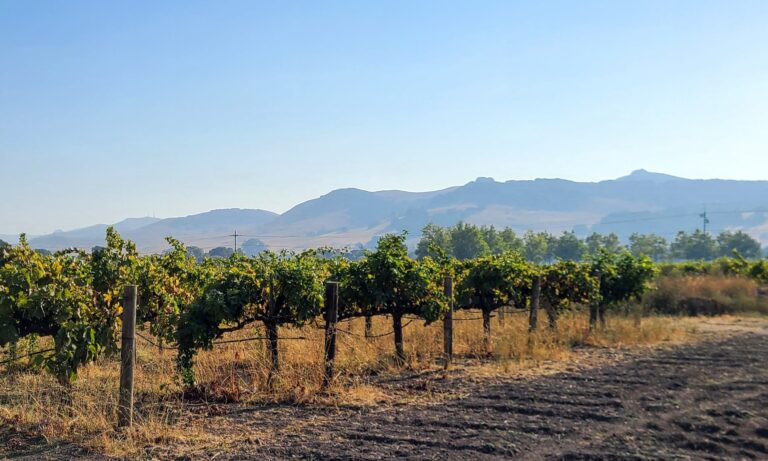
We started making wine in 2017. As the story goes (well worn at this point) I didn’t even want to do it, and only very reluctantly did I drag myself to Kim Giles’ vineyard down on the wrong side of the Napa River all those years ago. And yet, while I didn’t expect it, I found joy in the harvest. It’s hard and it’s backbreaking and sticky and there are spiders, but joy fizzes through the moment; a very finely entrained effervescence. It’s hard to isolate; there’s an essential rightness to it all. The dawn breaking over the vines, the rhythm of slicing through stems, the beauty of the fruit, the satisfaction of a full picking bin, stolen tastes of the fruit, and juice running down your arms, all the way to the elbow.
When I was a kid, my family kept English Setters. Every so often, we’d take them down to the marshes and abandoned salt ponds of Carneros and let them run. They had plenty of opportunity to run at home; they were well-loved and spoiled rotten. But seeing them in the marsh was something else. If you’ve ever seen a working breed in its element, there’s a magic to it. There’s all the intentness that centuries of having that specific purpose bred into blood and bone instills in them, of course, but there’s just such pure canine joy, too. They glow with it, their movements a fluid dance, and their happiness is outsized to their frames.
Harvest is like that. Everything about it is right and cascading. The bins fill and the morning wanes, and you were made for this, and every moment fills you to the brim in half ton measure. Taking the grapes to the crush pad feels like being a kid on Christmas day. Everything’s perfect and beautiful as you sort the fruit and clean macrobins and take sugar samples and pH tests and do back of the envelope math on FAN and YAN and additions and water. The wine will never be more perfect than it is then: all the potential you’ve been dreaming of, and here it is, filling your senses: smell, touch, taste, sight, all telling you you’re right on the precipice of greatness.
All the worries of the future have not yet taken root; there’s no stuck fermentations to fight, nor h2s, nor a horde of fruit flies trying to destroy your most beautiful and perfect wine, nor could there be. At this point, every block of marble still contains David, and he’s waiting for you. Who could resist the chisel?
Of course, it doesn’t last. Reality creeps back in, as does acetobacter and every other thing that plagues winemakers, and soon it will be time to press and angst about racking and topping and ML and sulfur dioxide. But it’s a well known canard that winemakers cannot say no to grapes, that their great weakness is just one more SKU even when they’ll know they’ll curse themselves later when it comes to the long work of winter, the often slow but sometimes sudden decline of potential into might-have-beens and above all, the nightmare that is bottling and reviews and trying to sell wine.
And yet we persist; such is the draw of the harvest. Once I had the taste of it, all the way back in 2017, I knew I was lost, because how could I ever stop?